
A DVR records video from analogue cameras over coaxial cable and encodes it at the recorder. An NVR records from IP cameras over network cable, and the cameras do the encoding. NVR systems offer higher resolution, PoE power and smarter AI features, so they are the better choice for new installations; DVRs make sense when upgrading an existing analogue system.
The recorder is the heart of any CCTV system, yet NVR and DVR are often used as if they mean the same thing. They do not. The type you choose decides which cameras you can use, how they are cabled and what features you will have in five years. Here is the difference in simple terms.

What is a DVR?
A DVR (digital video recorder) receives raw analogue video over coaxial cable, then compresses and stores it. Power usually runs on separate cables. DVRs are simple and proven, and HD analogue systems can deliver sharp pictures, which is why they remain common in older premises that already have coax cabling in place.
What is an NVR?
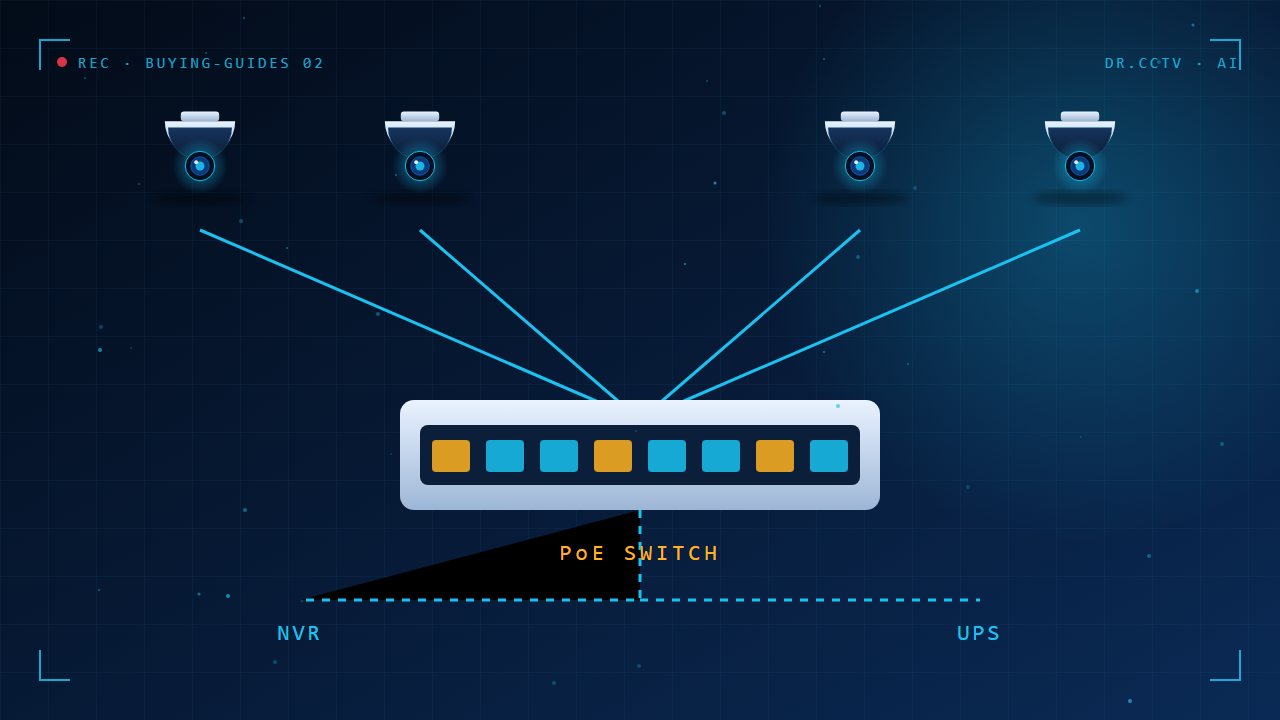
An NVR (network video recorder) records digital streams from IP cameras that are connected through a network switch. Each camera compresses its own video, so the recorder simply stores it. With PoE, one network cable carries both power and data, which makes installation neater and cameras easier to place.

Image quality and AI features
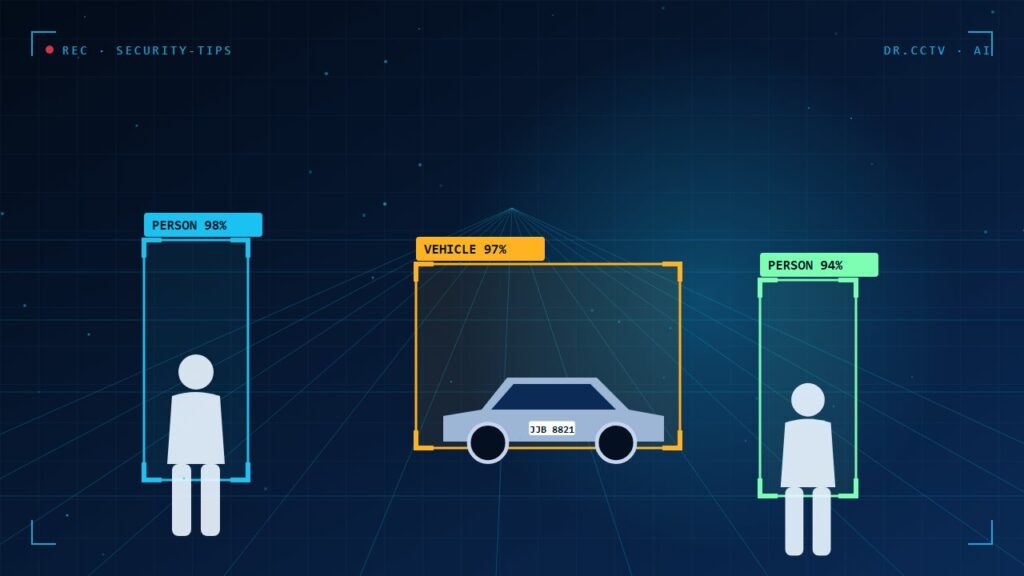
IP cameras on an NVR support higher resolutions, wider dynamic range and the full set of AI functions such as human and vehicle detection, line crossing and people counting. Analogue systems have improved, but the most advanced analytics remain firmly in the IP world, and that gap is growing every year.
Cabling, cost and upgrade path
A DVR system can reuse existing coaxial cable, which saves cost when upgrading an old setup. A new build is usually better with NVR and network cabling, since it scales easily: add a camera by adding a cable and a switch port. Hybrid recorders can even run both camera types while you migrate.

Which should you choose?
For new homes, shops and factories, choose NVR with IP cameras and PoE. For an existing analogue installation in good condition, a DVR or hybrid recorder keeps costs low and lets you upgrade in stages. A short survey will tell you whether existing cables are worth keeping.

Key takeaways
- DVR = analogue cameras, NVR = IP cameras.
- NVR gives better resolution, PoE and AI features.
- DVR or hybrid saves cost on existing coax cabling.
- New installations should normally use NVR.
Further reading
Related articles from our blog:
- How much CCTV storage do you need?
- How to choose a home CCTV system in Malaysia
- Protecting your CCTV system from hacking
Trusted external sources: Network video recorder (Wikipedia) and Digital video recorder (Wikipedia).
Frequently asked questions
Can an NVR record analogue cameras?
No. An NVR needs IP cameras. Hybrid recorders accept both analogue and IP cameras, which helps when you upgrade gradually.
Is NVR always more expensive than DVR?
Not always. Equipment can cost more, but PoE cabling saves installation effort, and the long-term features usually justify the choice.
Does the recorder affect picture quality?
Mainly through supported resolution and compression. With IP cameras, the camera sets the quality; the recorder must simply handle the bitrate.
Need help choosing?
Dr. CCTV by Yury Tech Sdn Bhd designs and installs CCTV, AI cameras, access control and alarm systems across Johor Bahru. Explore: NVR, DVR & Storage, Network & Power, or book a free site survey and we will recommend the right system for your property.