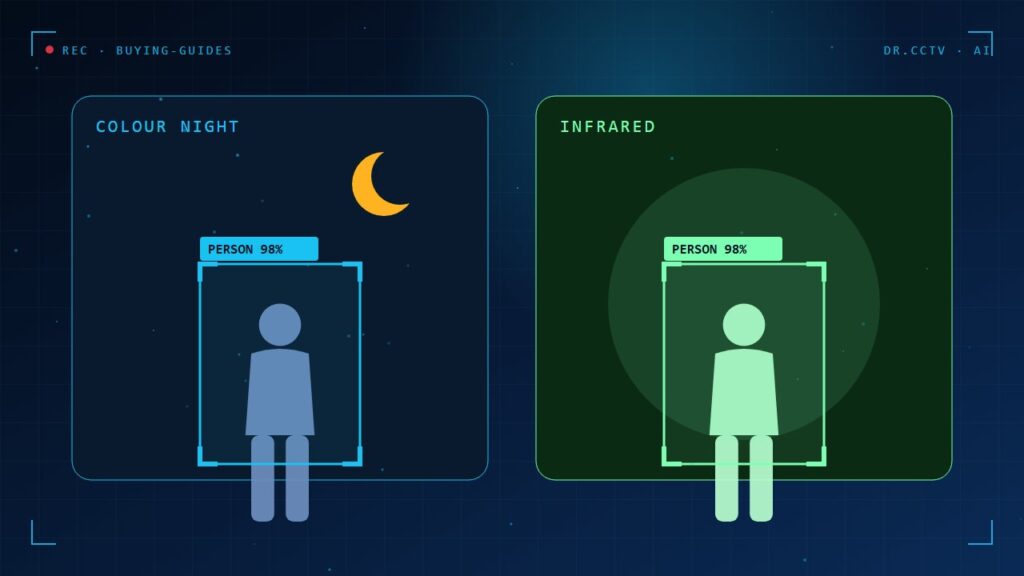
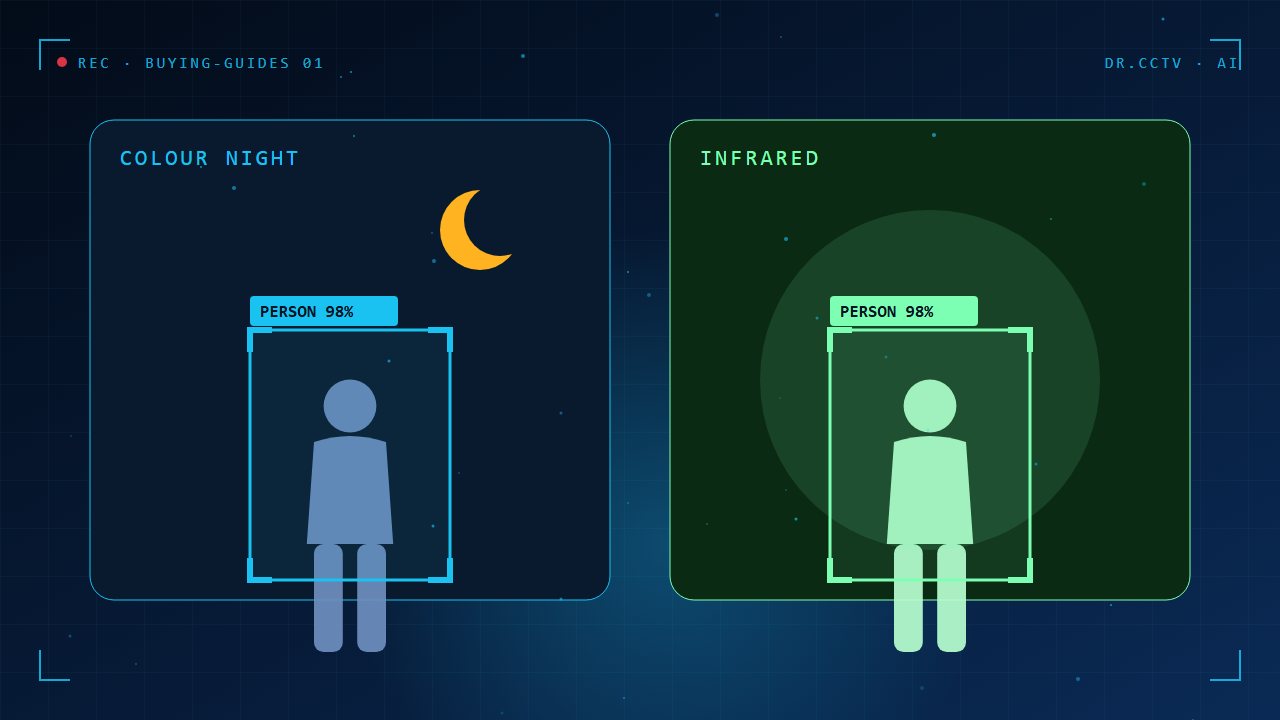
Infrared night vision shows a black-and-white picture using invisible IR light and reaches far in complete darkness. Colour night vision uses a large lens, a sensitive sensor and a little ambient or built-in white light to keep full colour, which makes clothing, vehicles and faces easier to identify. Choose colour where there is some light, and infrared for long range or no light.
Most crimes happen after dark, so how a camera sees at night matters as much as its daytime picture. Two technologies dominate: traditional infrared and modern colour night vision. Each has strengths, and the best choice depends on your lighting and what you need to identify.
How infrared night vision works
Infrared cameras switch to black-and-white at night and use invisible IR LEDs to light the scene. They can see a long distance in total darkness and are very reliable. The trade-off is that colours are lost, and faces and clothing can look flat, especially when the subject is close and the IR light washes out detail.
How colour night vision works
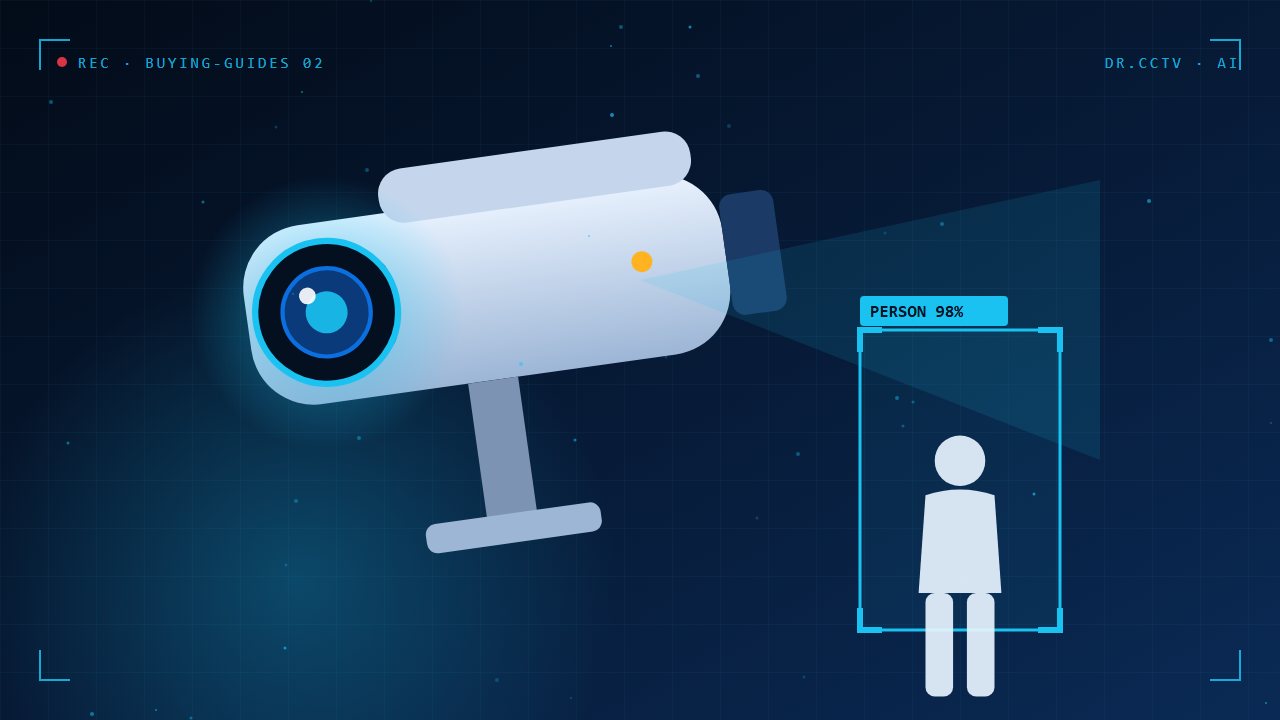
Colour night cameras combine a bright, wide-aperture lens with a highly sensitive sensor so they gather more light. Many add a small white light or use street lighting to keep full colour at night. The result is footage where clothing, vehicle colour and skin tones are visible, which is valuable for identification and police reports.
Where each technology wins
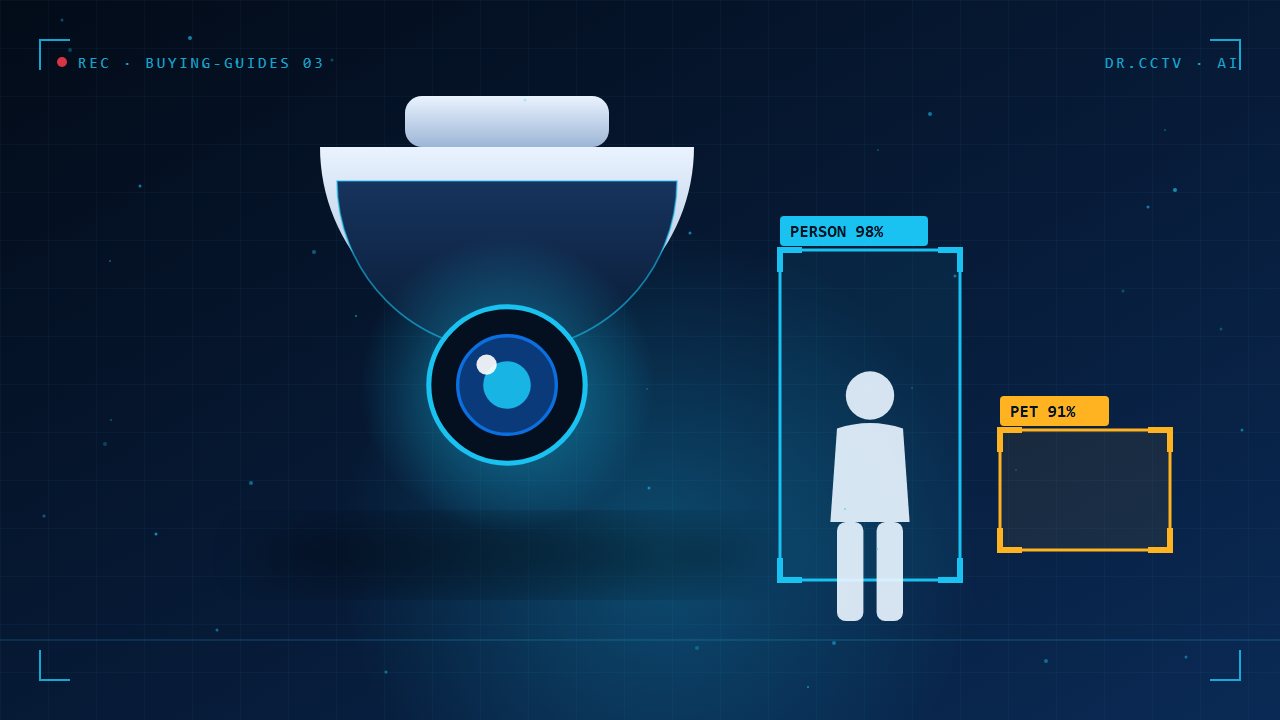
Colour night vision wins at gates, shopfronts, car parks and homes where some light is available and colour helps identify a person or vehicle. Infrared wins in very dark yards, factories and long perimeters where adding light is not practical. In pitch dark, a colour camera may switch to infrared automatically.
Smart hybrid cameras give you both
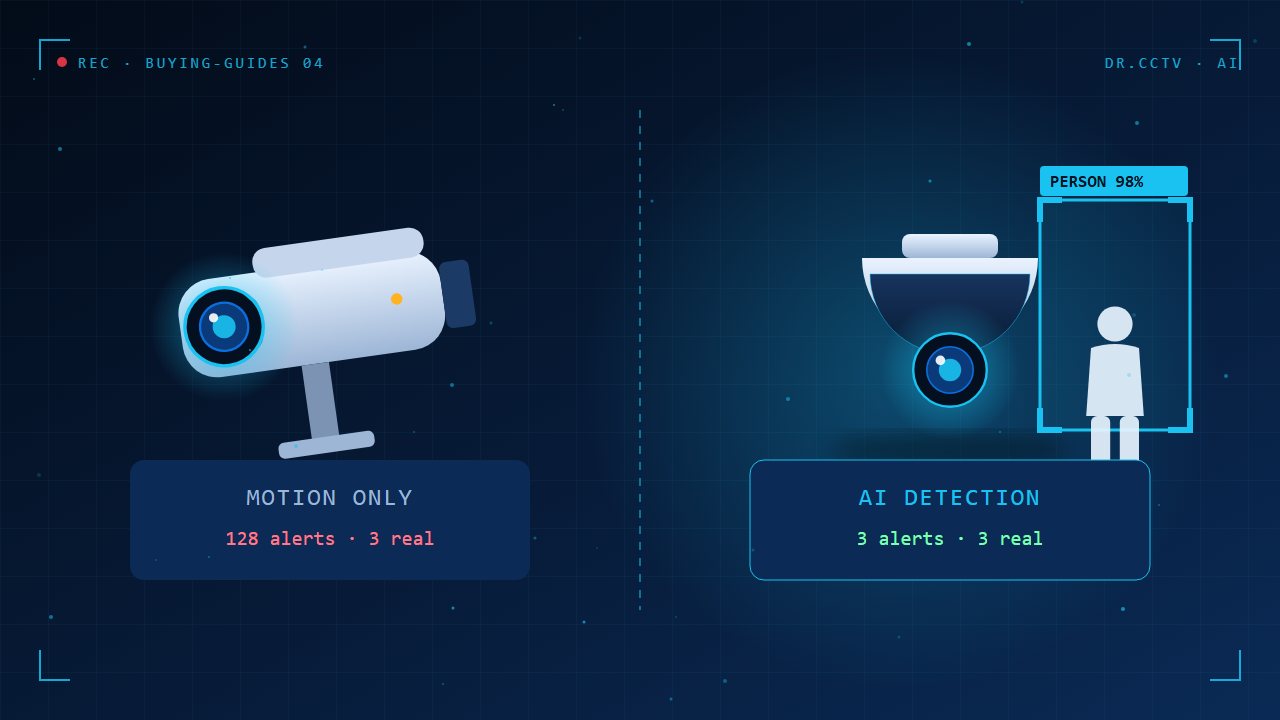
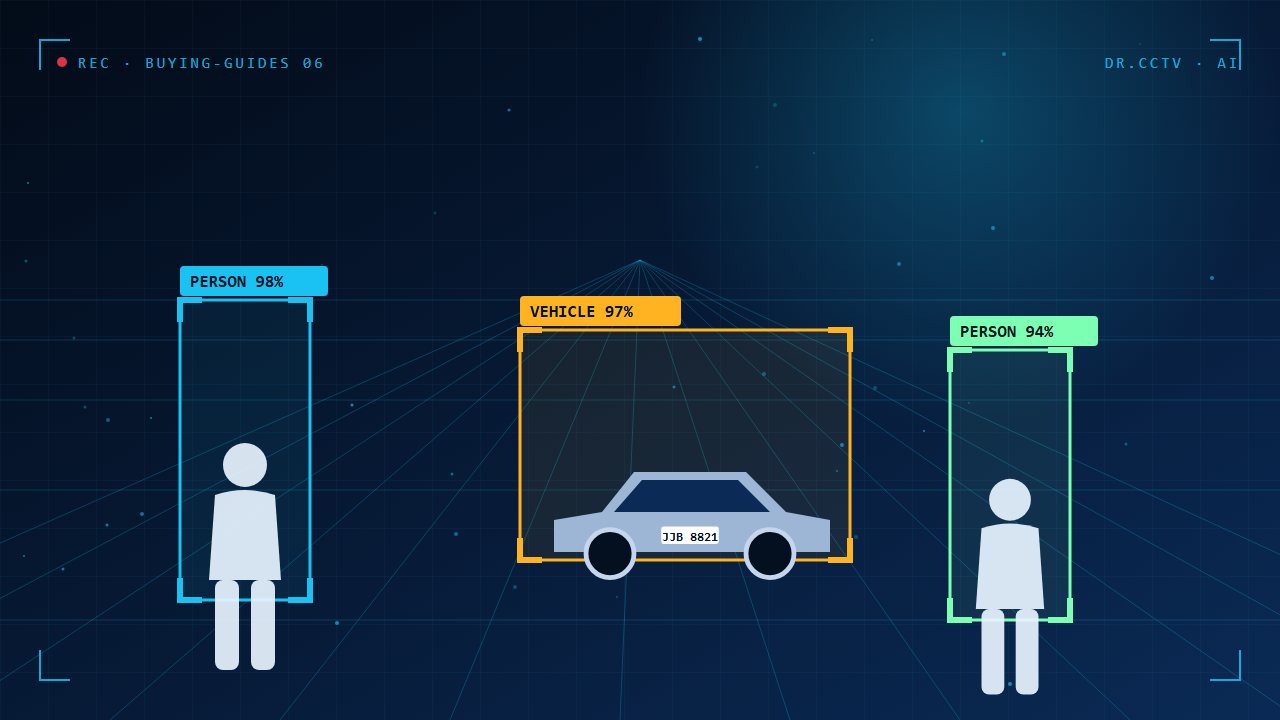
Many modern cameras offer both: infrared for darkness and a warm light that switches on when a person is detected. With AI detection on top, the camera can wake the light only for real events, saving power and avoiding insects flying around a constant light. This is a popular choice for homes and shops.

Tips for better night footage
Whichever you pick, mount the camera away from walls that reflect IR, keep lenses clean and avoid pointing at bright lights. Add a modest light at entrances for the best faces. Test the image at night on the day of installation, because a daytime demo cannot reveal night performance.
Key takeaways
- Infrared: long range in total darkness, black and white.
- Colour night vision: more detail with a little light.
- Hybrid cameras give both and work with AI alerts.
- Always test at night before handover.
Further reading
Related articles from our blog:
- 5 CCTV blind spots at Johor homes
- AI camera vs standard camera: which do you really need?
- How to choose a home CCTV system in Malaysia
Trusted external sources: Night-vision devices (Wikipedia) and Hikvision official website.
Frequently asked questions
Is colour night vision better than infrared?
It is better for identification when some light is available. Infrared is better for long range in complete darkness.
Do colour night cameras need a light?
Many work with existing street or house lighting. Some have a built-in white light for pitch-dark areas.
Why does my IR camera show white glare?
IR light bouncing off nearby walls or dust and insects close to the lens can cause glare. Reposition the camera and keep the lens clean.
Need help choosing?
Dr. CCTV by Yury Tech Sdn Bhd designs and installs CCTV, AI cameras, access control and alarm systems across Johor Bahru. Explore: AI Cameras, CCTV Cameras, or book a free site survey and we will recommend the right system for your property.